The SABRENT SuperSpeed 2 Slot USB 3.0 Flash Memory Card Reader review is most useful for shoppers who want a straightforward way to access several familiar card formats from a USB port.
Its USB 3.0 connection, broad listed card support, and plug-and-play setup make it a practical basic reader, provided your device has a compatible USB host.
SABRENT 2 Slot Reader Review Summary
The quick verdict
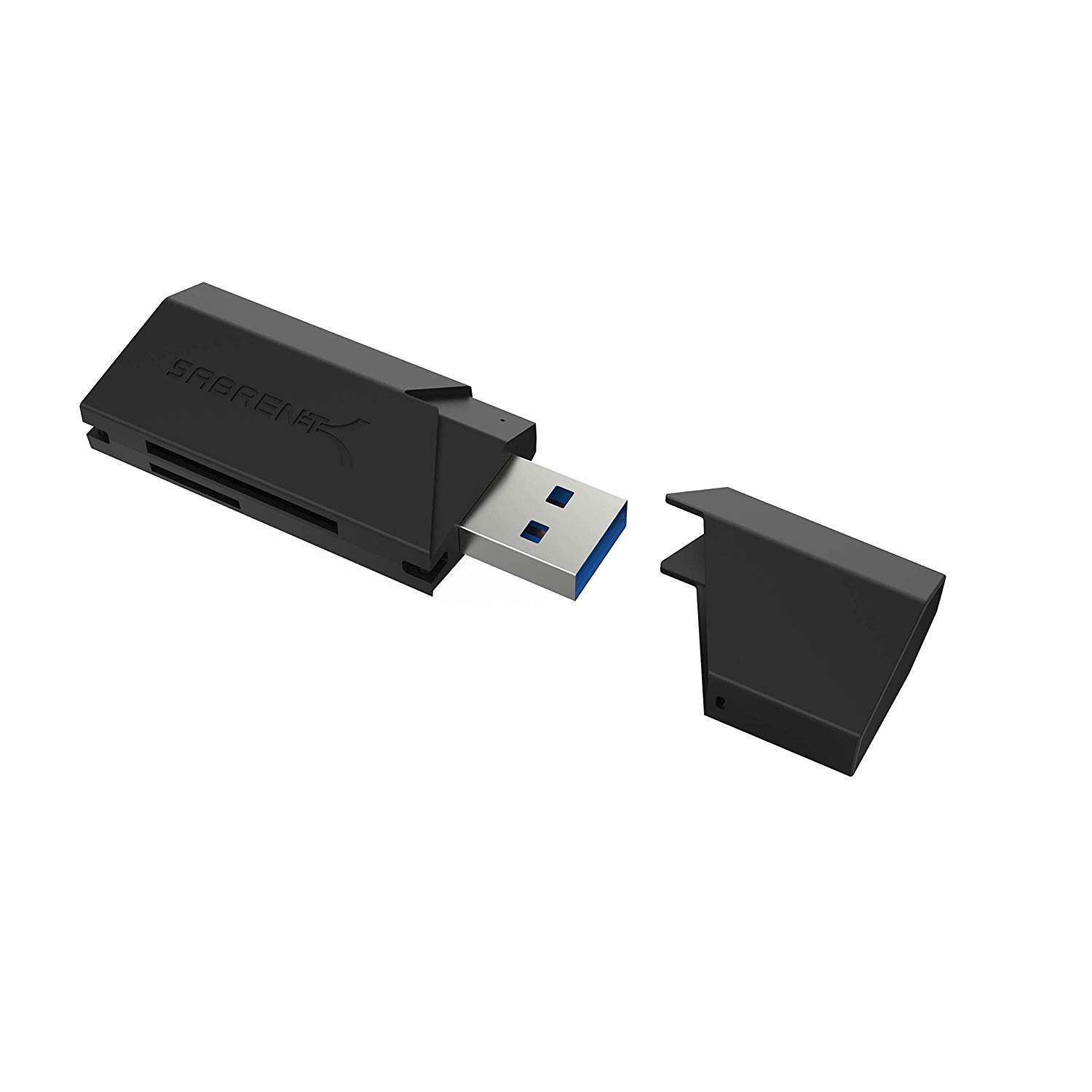
10,000+ ratings
Read Amazon ReviewsSABRENT SuperSpeed 2 Slot USB 3.0 Card Reader
A simple pick for buyers who need USB-A access to common SD and microSD cards across compatible computers and Android systems.
- USB 3.0 interface with backward compatibility for USB 2.0 hosts.
- Supports SD, SDHC, SDXC, MMC, MicroSD, and T-Flash cards.
- Plug-and-play use with no installation required.
- Powered through the USB port, without a separate power supply.

Pros
- Covers several common SD and microSD card formats, plus MMC and T-Flash.
- USB-powered design avoids carrying a separate power adapter.
Consider before buying
- The description does not specify measured transfer speeds, so USB 3.0 should be viewed as the interface rather than a guaranteed performance level.
- Check that the reader's USB connection matches your intended device; a USB-C-only device may require a suitable adapter.
Read the full review summary
This reader focuses on the essentials: it connects through USB, draws power from that port, and supports SD, SDHC, SDXC, MMC, MicroSD, and T-Flash cards.
USB 3.0 provides the interface, with backward compatibility for USB 2.0 hosts; the supplied details do not give measured transfer rates, so the interface alone should not be treated as a promise of a particular real-world speed.
It is best suited to someone who wants a small, dedicated reader for moving files from common memory cards to a compatible Windows, Mac, Linux, or certain Android system.
Its fixed USB-A style connection is a practical point to check against your computer or device before buying, especially if your everyday equipment relies on USB-C.
The buying factors
SABRENT 2 Slot Reader Scorecard
Editorial scores reflect listed features and buyer fit; they are not laboratory measurements or customer ratings.
Card-format range
The listed support covers SD-family cards, MMC, MicroSD, and T-Flash, making it useful across several common formats.
USB interface flexibility
USB 3.0 and USB 2.0 host compatibility cover a range of USB connections, though the connector should be checked against the target device.
Setup simplicity
Plug-and-play operation requires no installation according to the product details.
Power convenience
It takes power from the USB port, so a separate power supply is not needed.
Platform coverage
Windows, Mac, Linux, and certain Android systems are named, with Android compatibility appropriately limited.
Portability for basic transfers
The straightforward USB-powered reader suits occasional card access, though the description gives no dimensions or protective design details.
Key Features and Specifications of SABRENT 2 Slot Reader
- USB 3.0 interface with backward compatibility for USB 2.0 hosts.
- Supports SD, SDHC, SDXC, MMC, MicroSD, and T-Flash cards.
- Plug-and-play use with no installation required.
- Powered through the USB port, without a separate power supply.
- Listed compatibility includes Windows, Mac, Linux, and certain Android systems.
Pros and Cons of SABRENT 2 Slot Reader
Pros
- Covers several common SD and microSD card formats, plus MMC and T-Flash.
- USB-powered design avoids carrying a separate power adapter.
- Plug-and-play setup keeps use simple for basic file transfers.
- USB 2.0 host compatibility allows use with older USB systems.
Consider before buying
- The description does not specify measured transfer speeds, so USB 3.0 should be viewed as the interface rather than a guaranteed performance level.
- Check that the reader's USB connection matches your intended device; a USB-C-only device may require a suitable adapter.
- Android support is limited to certain systems, so confirm compatibility for your specific device before relying on it.
Who Should Buy SABRENT 2 Slot Reader?
Good fit
Consider this reader if your routine involves moving photos, documents, or other files from SD, MicroSD, or the other listed card types to a compatible computer.
Its main appeal is straightforward utility: insert a supported card, connect to a USB host, and use the reader without installing software or supplying separate power.
It may also suit a household or work setup with devices from more than one generation, since USB 2.0 host compatibility is included alongside USB 3.0.
Before choosing it, check the computer or Android device you plan to use and make sure its port and operating system fall within the supported setup.
Who should skip it
Skip it if your main device has only USB-C and you do not want to use an adapter. A reader with a USB-C connection may fit that setup more directly.
Look elsewhere if you need guaranteed performance figures, a particular workflow beyond reading the listed card types, or confirmed compatibility with a specific Android device. The supplied product details do not establish those points.
How the SABRENT 2 Slot Reader Fits Everyday Card Transfers
Card support for mixed devices
The list spans SD, SDHC, SDXC, MMC, MicroSD, and T-Flash, which gives the reader broad usefulness when cards from different devices need to be accessed on one computer.
Check the label or documentation for your card if its format is unusual; support for one family does not automatically confirm every specialized card type.
USB 3.0 and backward compatibility
USB 3.0 is the reader's stated interface, while compatibility with USB 2.0 hosts helps it work with older USB systems.
Actual transfer time depends on the card, host, and files involved, and no specific measured speed is provided here. Buyers prioritizing large recurring transfers should compare reliable performance information for their exact setup.
Power and setup
Drawing power from the USB port makes the reader easier to use away from a desk with a separate adapter.
Plug-and-play operation also reduces setup steps, although the target device still needs to recognize the reader and support the card format.
Operating-system fit
Windows, Mac, and Linux are included in the compatibility description, alongside certain Android systems.
The Android qualification matters: confirm that your particular device supports USB storage accessories and has the required connection before making this the only reader in your kit.
Alternatives to SABRENT 2 Slot Reader
One alternative is included because it offers a useful connector difference for the same card-reading task.
Computer Memory Card Readers alternative
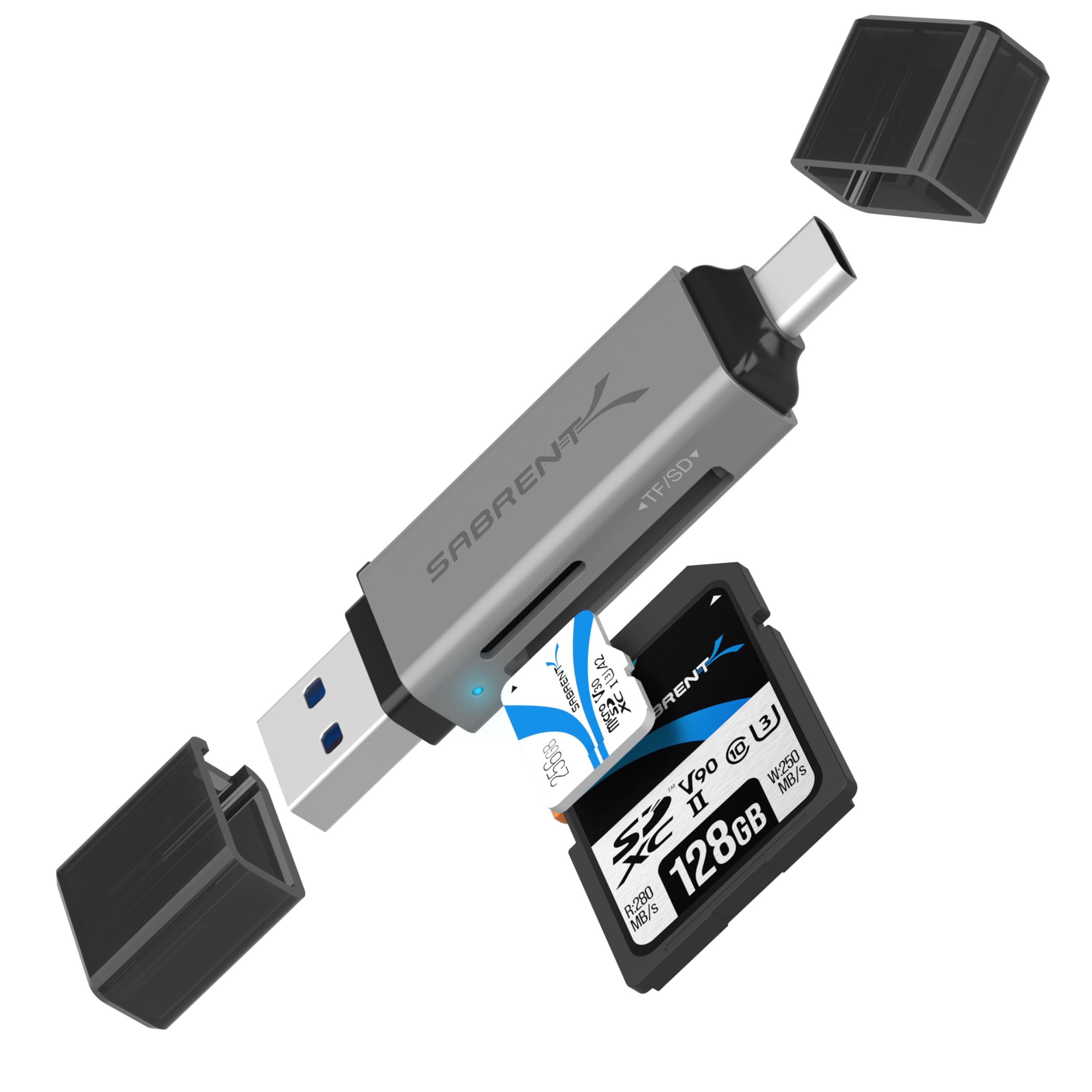
2,000+ ratings
Read Amazon ReviewsSABRENT USB-C & USB-A SD/MicroSD Card Reader (CR-BCA2)
Choose the CR-BCA2 if you need direct USB-C and USB-A connections or want a stated interface ceiling for planning transfers.
The main reader is a reasonable fit when its broader listed formats, including MMC and T-Flash, matter more than having both connector types.
- The CR-BCA2 provides both USB-C and USB-A connections, supports SD and MicroSD card families, and lists USB 3.0 transfers up to 5Gbps.
- It is described as plug-and-play for Windows, macOS, and compatible Android devices.
- The SuperSpeed 2 Slot reader supports SD, SDHC, SDXC, MMC, MicroSD, and T-Flash, with USB 3.0 and USB 2.0 host compatibility.
Is SABRENT 2 Slot Reader Worth It?
The SABRENT SuperSpeed 2 Slot USB 3.0 Card Reader is worth considering as a simple, USB-powered option for accessing the common card formats it lists.
Plug-and-play setup and USB 2.0 host compatibility make it a flexible basic tool for compatible systems.
Check the connection and operating-system fit before buying, particularly for USB-C-only devices and Android systems.
If you need direct USB-C access or a stated speed ceiling, the alternative may suit you better; otherwise, this reader covers the core card-transfer use case without extra setup.
Your review at a glance
10,000+ ratings
Read Amazon ReviewsSABRENT SuperSpeed 2 Slot USB 3.0 Card Reader
A simple pick for buyers who need USB-A access to common SD and microSD cards across compatible computers and Android systems.
- USB 3.0 interface with backward compatibility for USB 2.0 hosts.
- Supports SD, SDHC, SDXC, MMC, MicroSD, and T-Flash cards.
- Plug-and-play use with no installation required.
- Powered through the USB port, without a separate power supply.